
Acmefil · spin flash dryer manufacturer since 2000
Spin flash dryers that turn wet cake into free-flowing powder
Filter cake, sticky paste and viscous sludge – broken up by a high-speed rotor, dried in a swirling hot-air vortex and collected as fine powder, in one continuous step. Designed and built by Acmefil in Ahmedabad.
- ISO 9001:2015 certified manufacturer
- Pin mill and cage mill rotors built in-house
- Pilot trials on a 10 kg/hr spin flash dryer
Trusted by manufacturers of chemicals, pigments, agrochemicals and more















How it works
From wet cake to dry powder in seconds
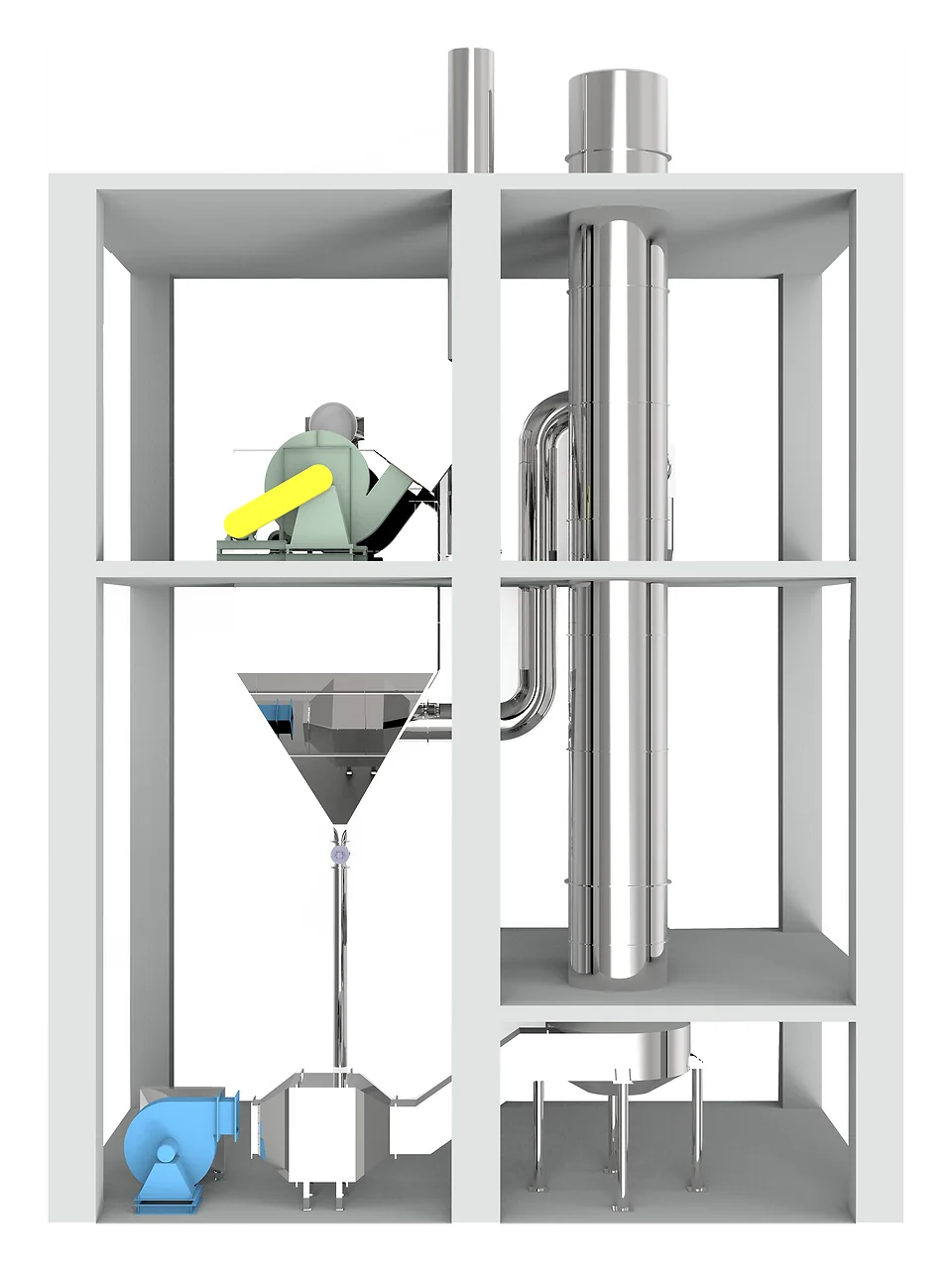
A spin flash dryer breaks the cake, dries it and classifies it in one swirling chamber. Fresh cake meets the hottest air, so drying is fast – and only fine, dry particles leave.
- 1
Wet cake feeding
Wet cake, paste or sludge goes into an agitated feed hopper that stops bridging; a variable-speed screw meters it into the drying chamber.
- 2
Hot air generation
A blower pushes air through a hot air generator – direct or indirect fired, steam or thermic fluid – to the base of the chamber.
- 3
Tangential air entry
Hot air enters the chamber base tangentially through an air jacket, setting up a strong swirling vortex.
- 4
Disintegration
A rotor at the base – pin mill or cage mill – breaks the cake into fine particles right inside the hottest air.
- 5
Drying in suspension
Particles dry in seconds as they swirl upwards; heavier, wetter lumps fall back to the rotor and are broken again.
- 6
Classification
A classifier ring at the chamber top lets only fine, dry particles leave – oversize stays in until it is ready.
- 7
Powder separation
A cyclone and bag filter separate the powder from the air; rotary valves discharge it for packing.
- 8
PLC control & clean exhaust
The ID fan sends clean air to the chimney. The PLC holds the outlet temperature by trimming the feed rate.
Acmefil spin flash dryers
Built for the feeds other dryers can’t handle
Two rotor designs, set up for the cake you have. Pick a type or a feed to read its full guide.
Pin mill type spin flash dryer
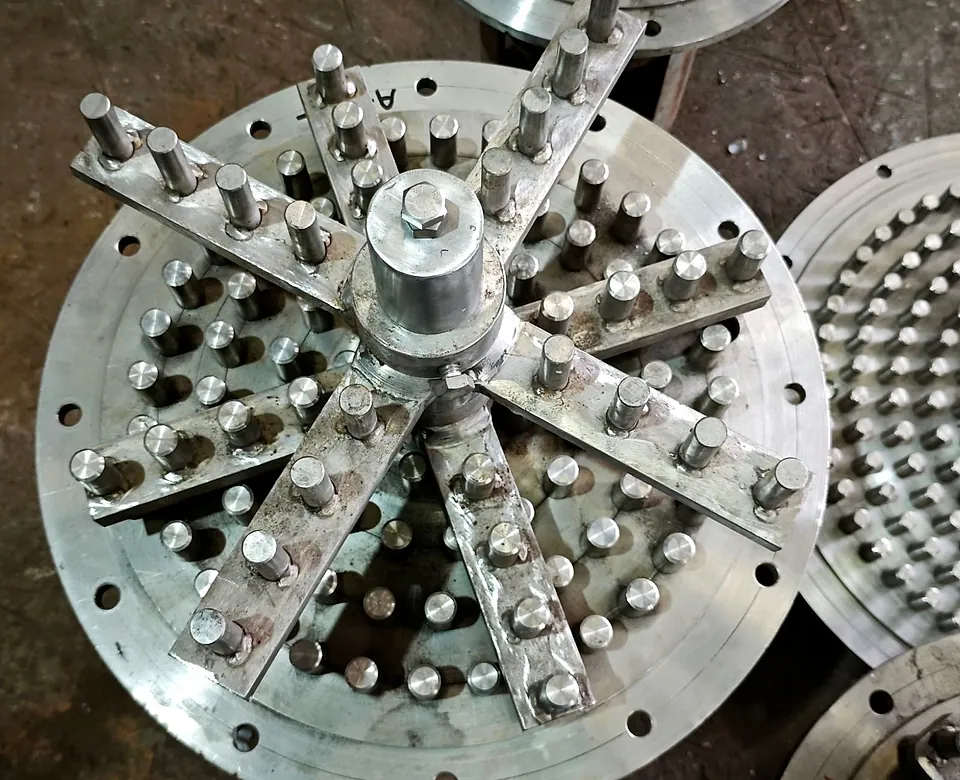
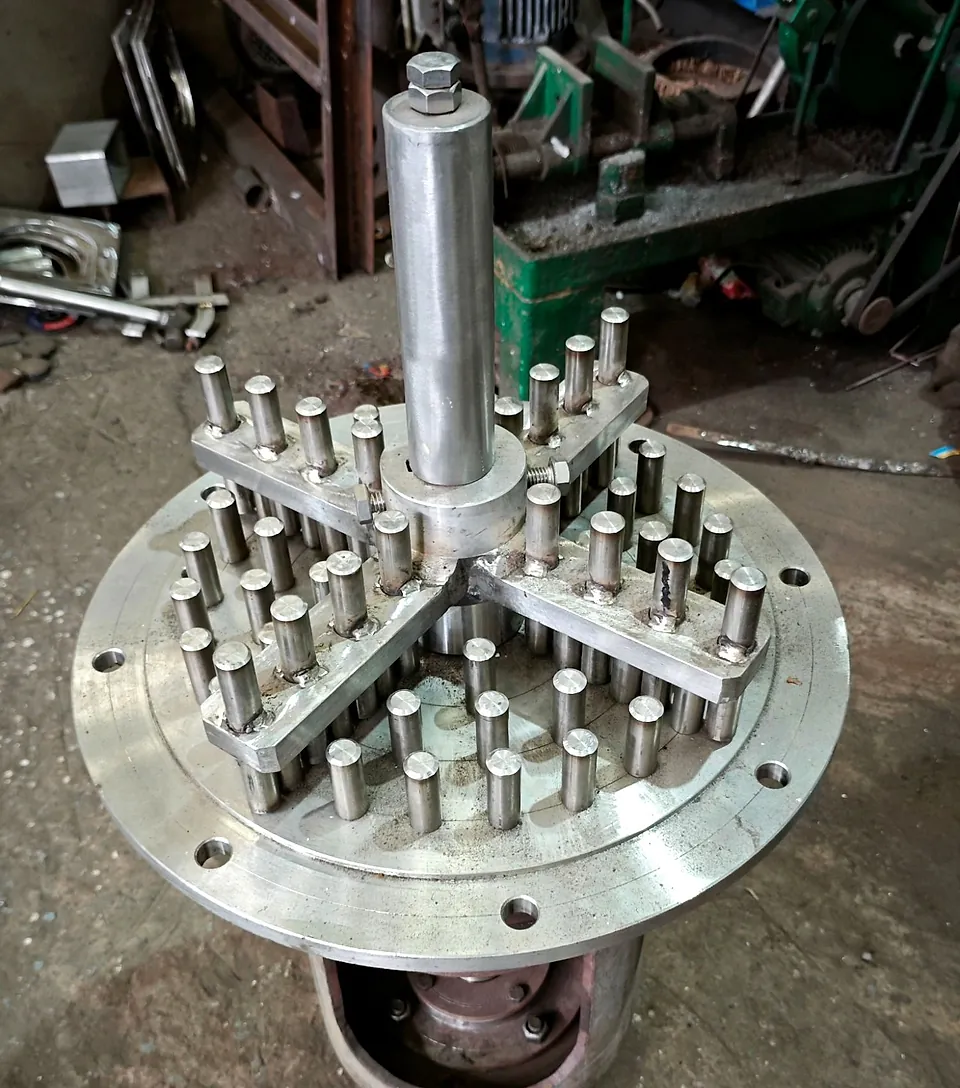
Rows of pins on the rotor and the base plate shear sticky, gelatinous cake into fine particles inside the hot air.
- Sticky & gelatinous cake
- Fine, uniform powder
- Pigments & agrochemicals
Cage mill type spin flash dryer
A rotating cage of bars breaks heavy wet cake and viscous sludge – robust, open and hard to choke.
- Heavy wet cake
- High-viscosity sludge
- Robust, low clogging
Wet cake dryer
Wet filter cake from a centrifuge or nutsche turned into dry, free-flowing powder in one pass.
- Centrifuge & nutsche cake
- One continuous step
- No separate milling
Filter press cake dryer
Lumpy filter press cake is broken up as it dries – no pre-crushing, no tray dryer bottleneck.
- Filter press cake
- Lumps broken in the dryer
- Replaces tray dryers
Sticky wet cake dryer
Back-mixing with dry powder and an agitated feed keep sticky, slimy cake from clogging the plant.
- Slimy & gelatinous
- No clogging
- Steady feeding
Paste & high-viscosity sludge dryer
Thick pastes that cannot be pumped to a spray dryer are fed by screw and dried straight to powder.
- Non-pumpable pastes
- Viscous sludge
- Powder in one step
Pigment dryer
Pigment press cake dried and de-agglomerated together – fine, soft powder with good colour strength.
- Pigment press cake
- Soft, fine powder
- Colour strength kept
ETP sludge dryer
Industrial effluent treatment sludge dried to a stable, low-volume powder for disposal or reuse.
- ETP sludge
- Lower disposal volume
- Stable dry solids
The heart of the dryer
Rotors built in our own works
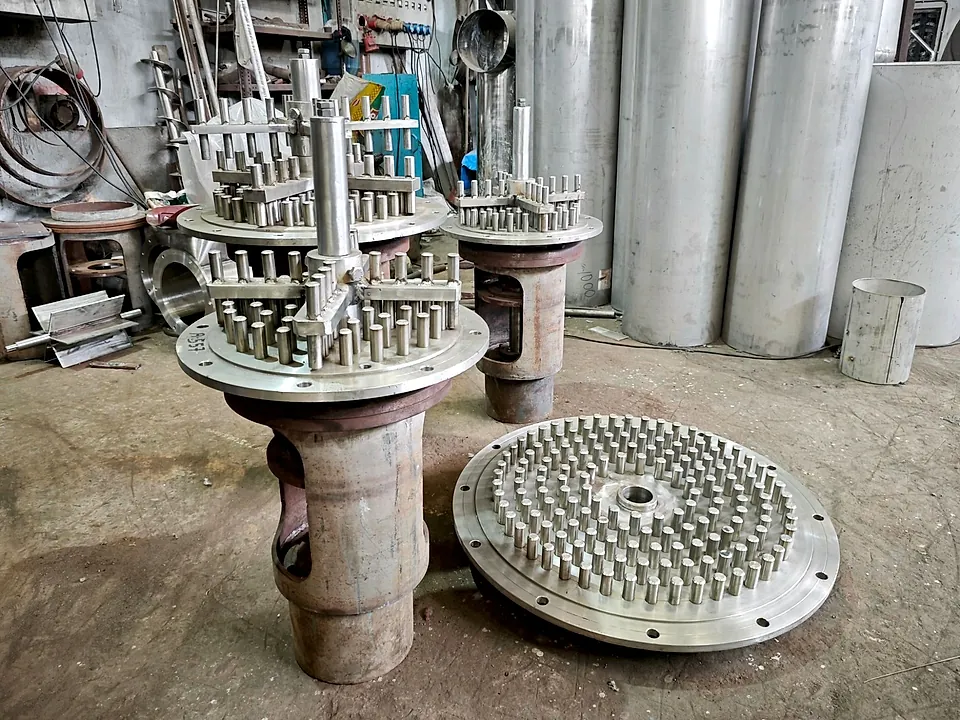
The rotor decides how well a spin flash dryer handles your cake. Acmefil machines its pin mill and cage mill rotors in-house, so the pin pattern, tip speed and clearances are set for your product – and spares fit first time.
- Pin millSticky, gelatinous cake
- Cage millHeavy cake & sludge
- Genuine sparesMade to drawing
Dryer selector
Which dryer fits your feed?
Three quick questions for a starting point. Our process engineers confirm it on your feed data or in a pilot trial.
Pin mill type spin flash dryer
General guidance only – the final choice depends on moisture, stickiness, heat sensitivity and capacity. We confirm it on your feed or in a pilot trial.
Applications
Proven on difficult wet solids
Wherever a cake, paste or sludge must become a dry, fine, easy-to-handle powder, a spin flash dryer does it in one step.
Acmefil plants at work
Built in Ahmedabad, running across industry
Real Acmefil spin flash dryers and rotors – from the workshop floor to plants in production.
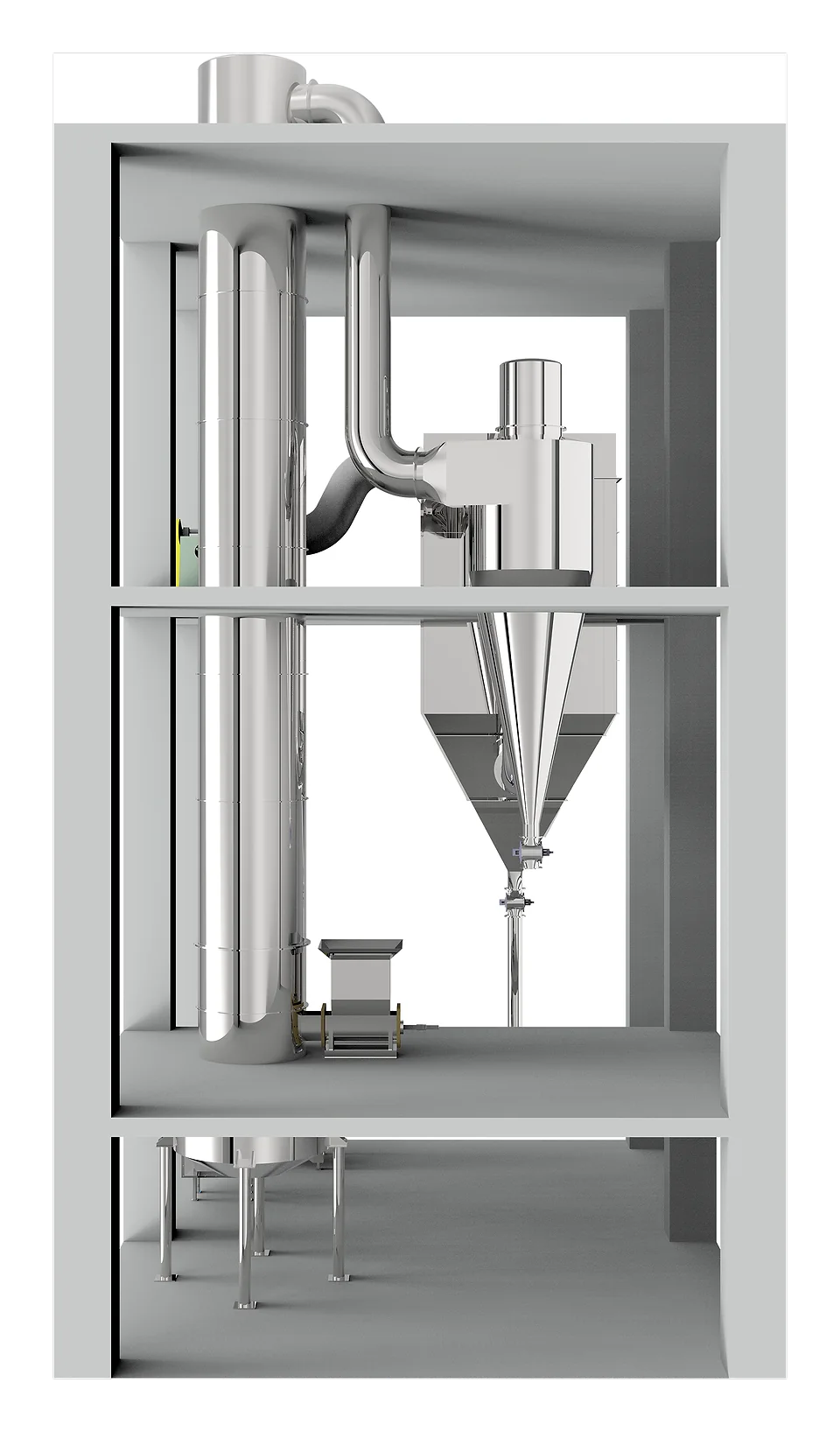
 Spin flash drying plantBag filter, cyclone and feed hopper in a steel structure
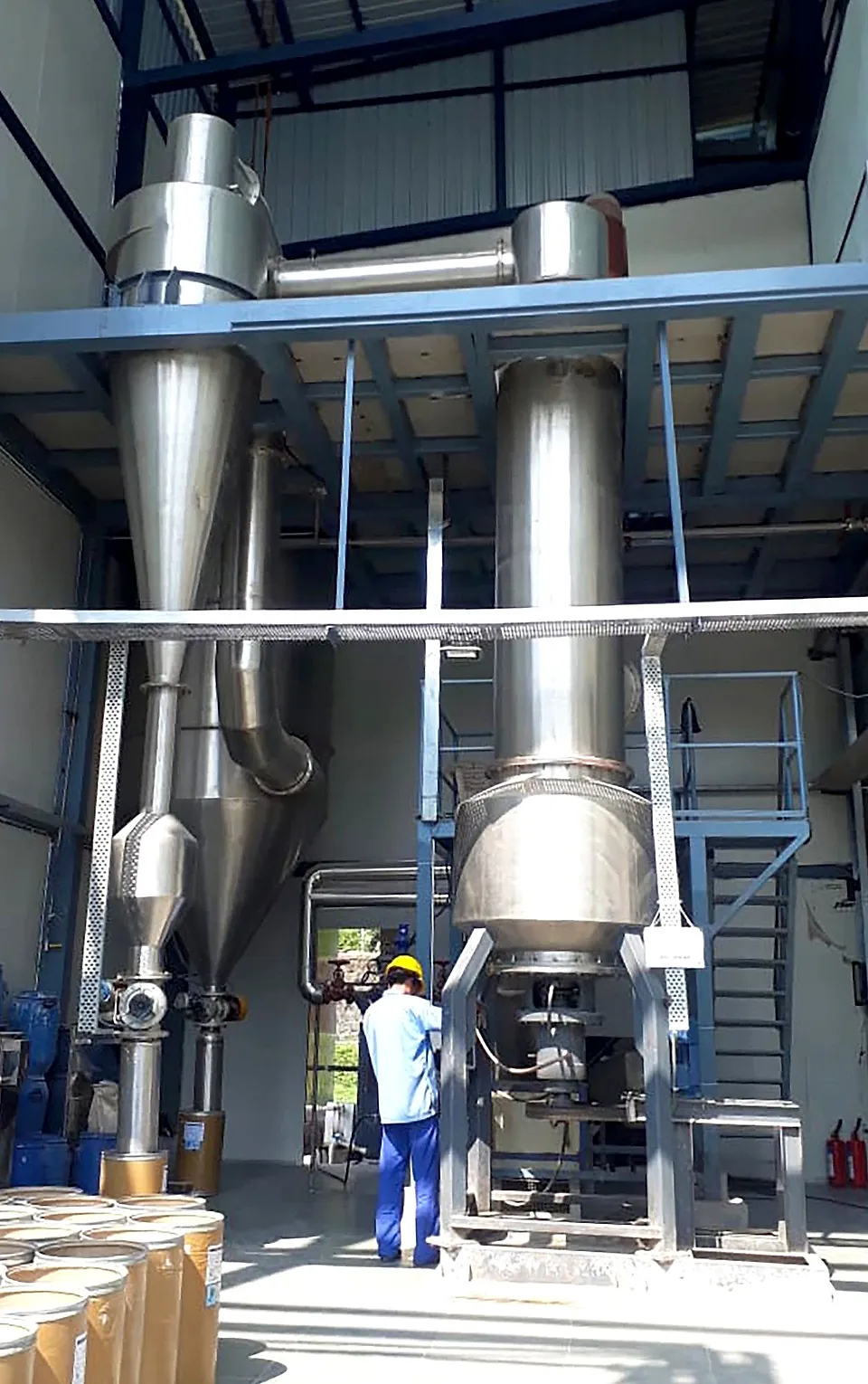 Installed indoorsDrying chamber, cyclone and bag filter
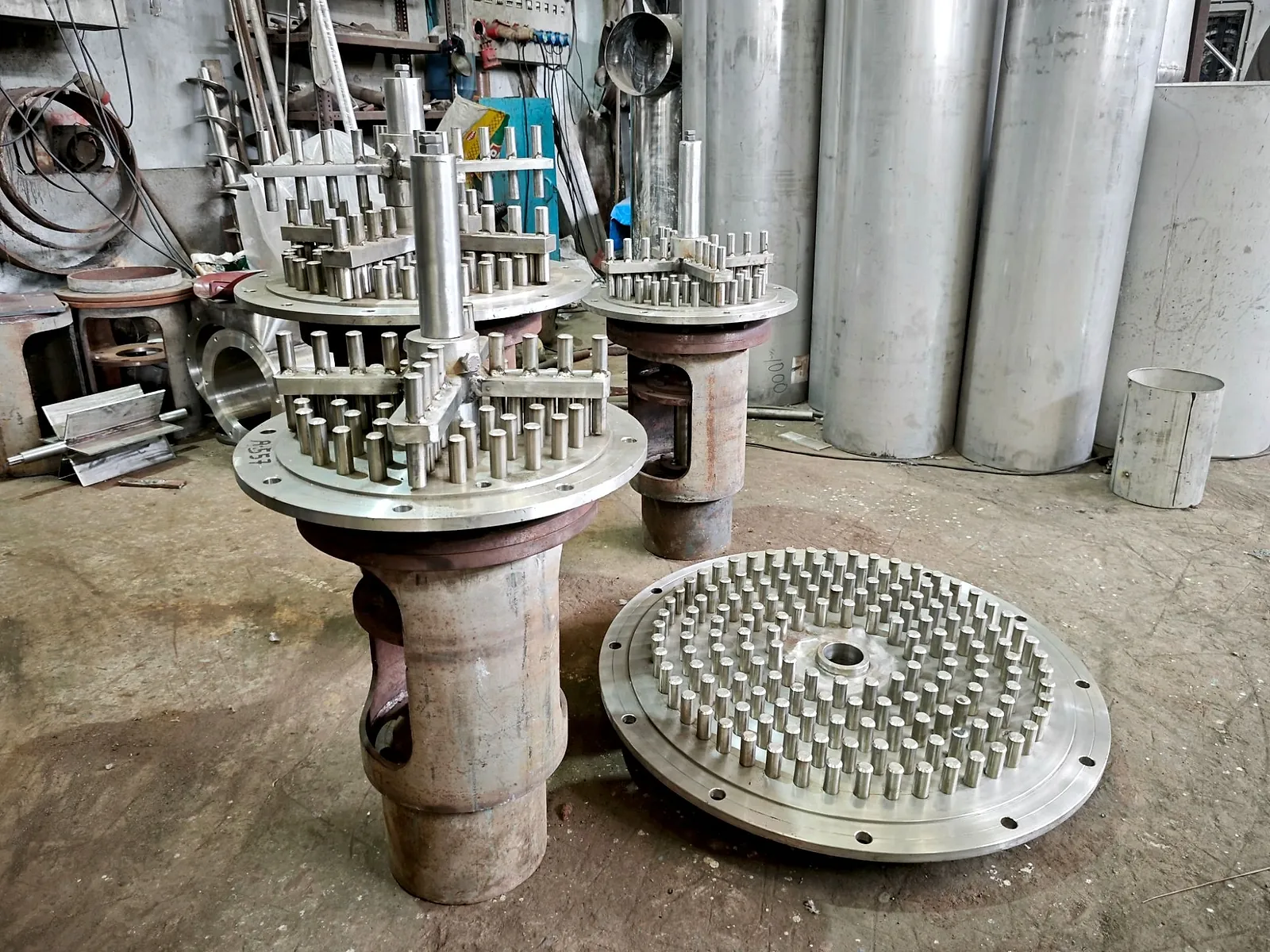 Pin mill rotorsMachined in the Acmefil works
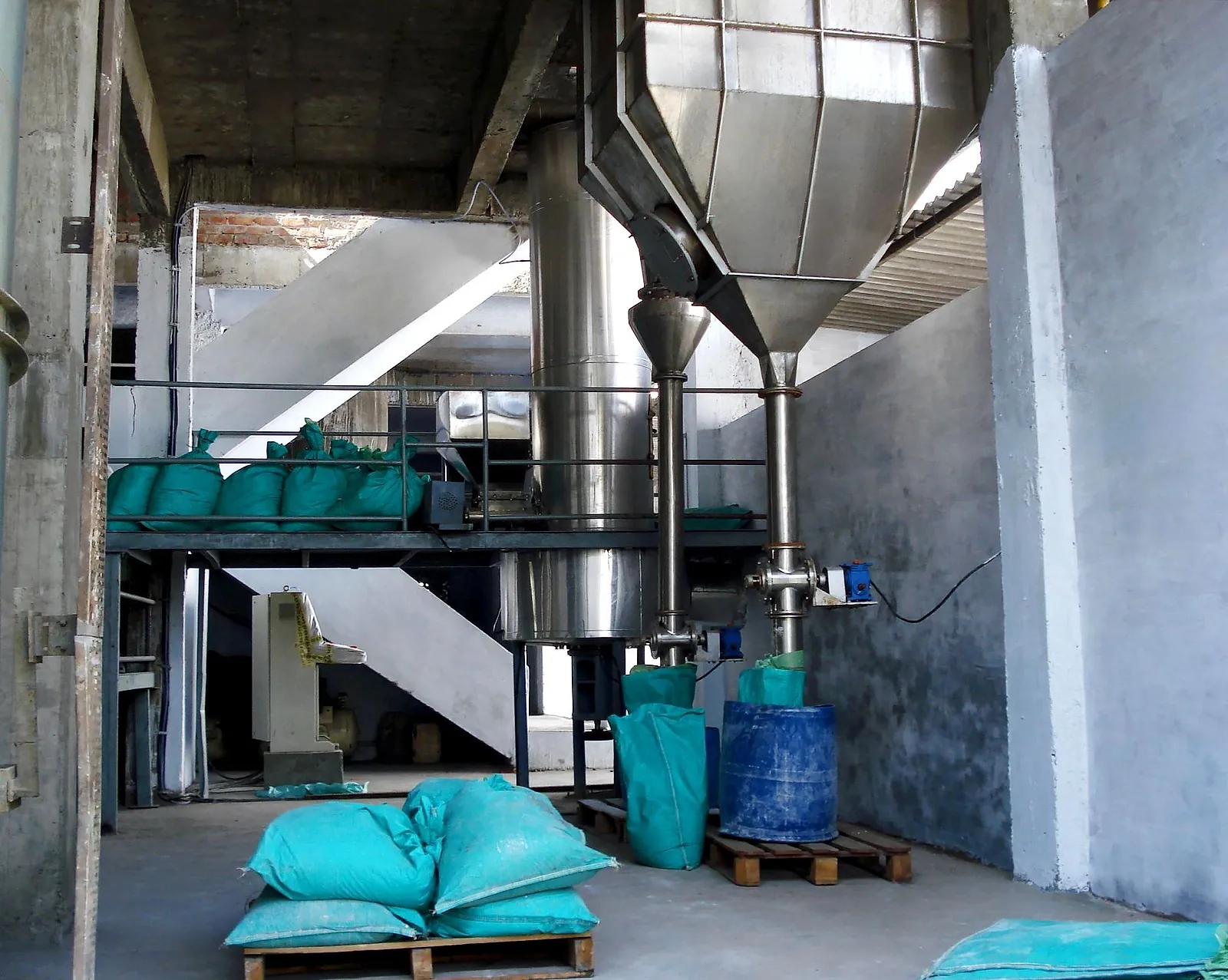 Powder to bagsCyclone and bag filter discharge
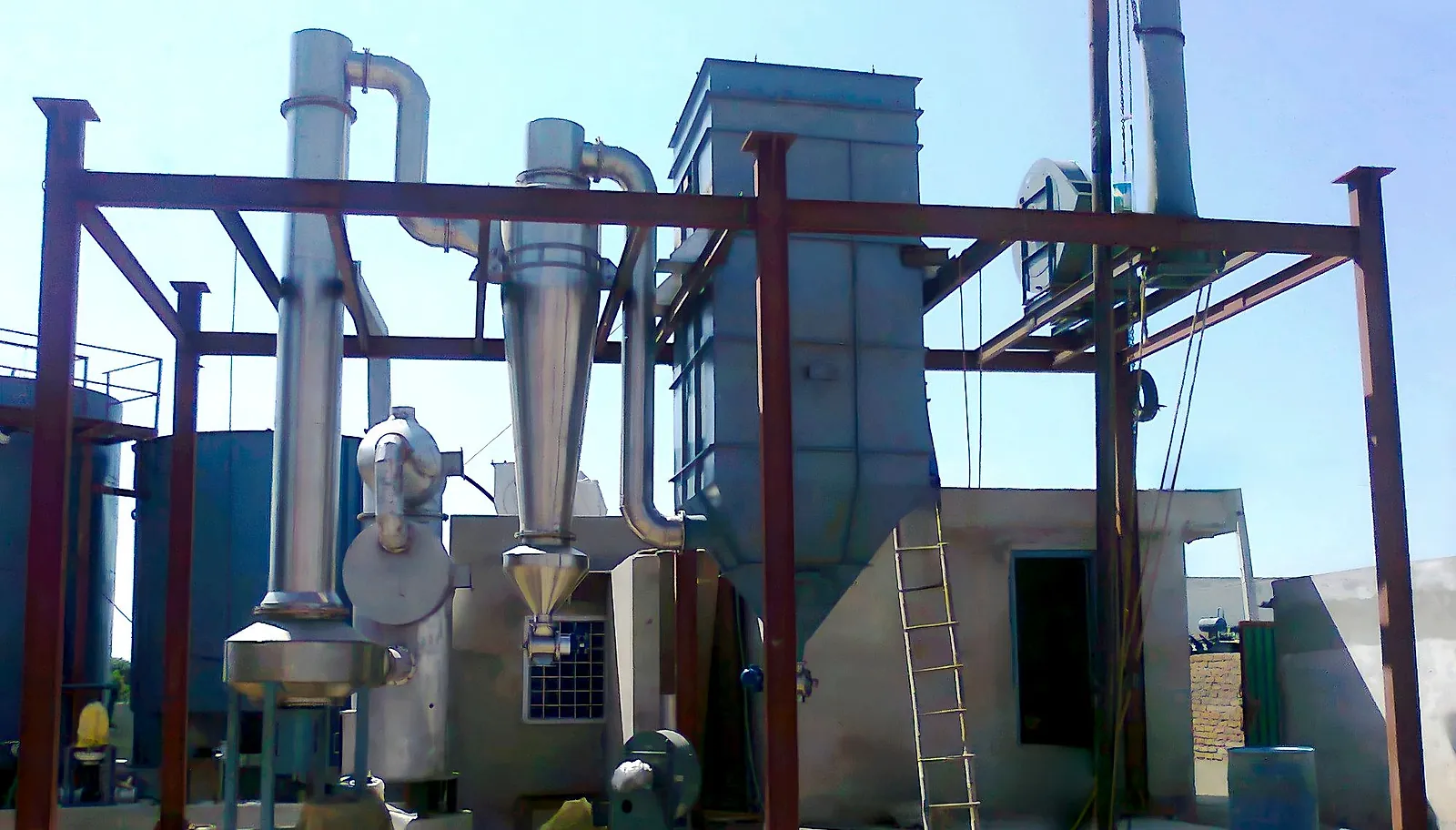 Plant under erectionChamber, cyclone, bag filter and ID fan
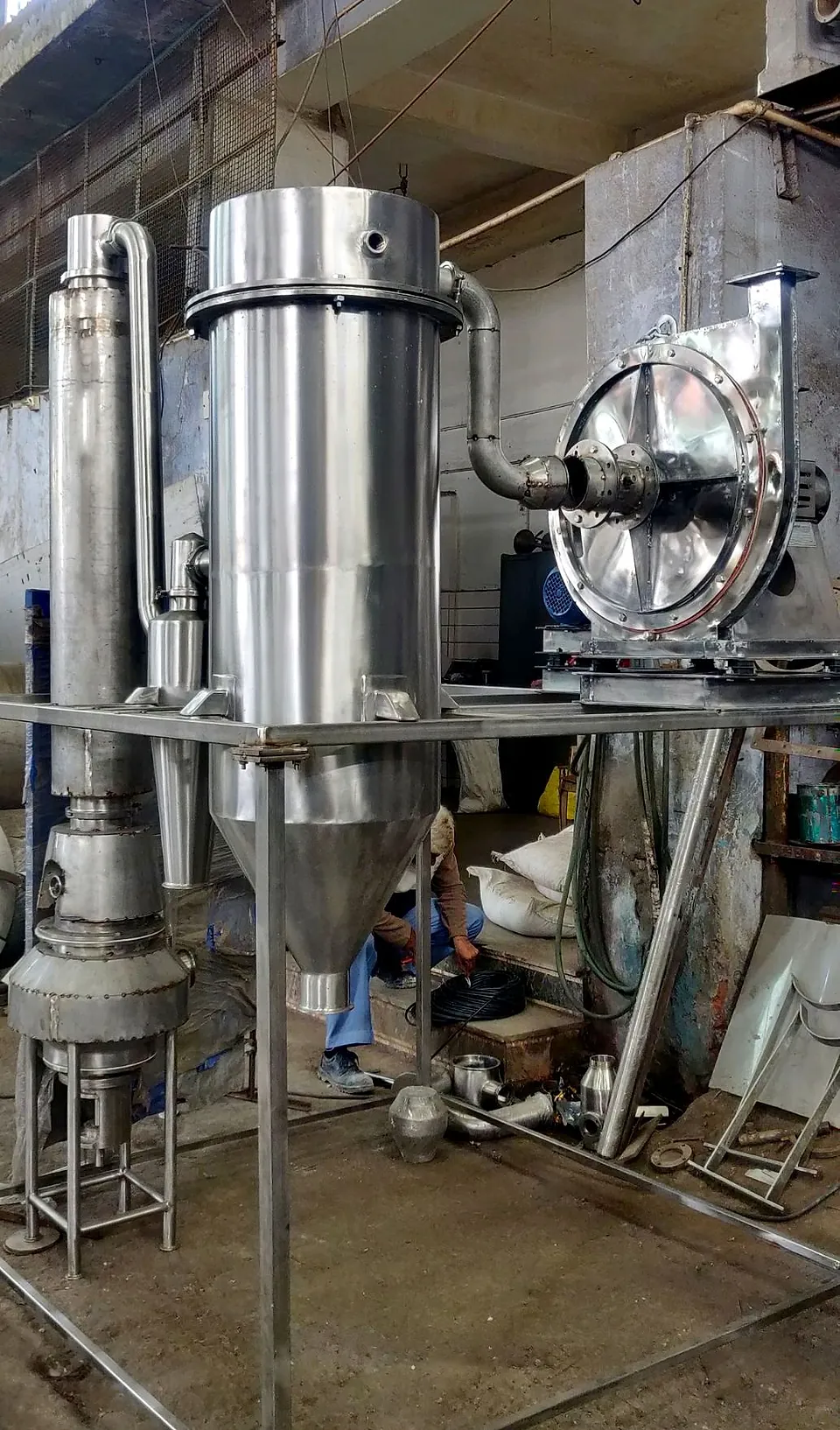 In the workshopStainless chamber and blower before dispatch
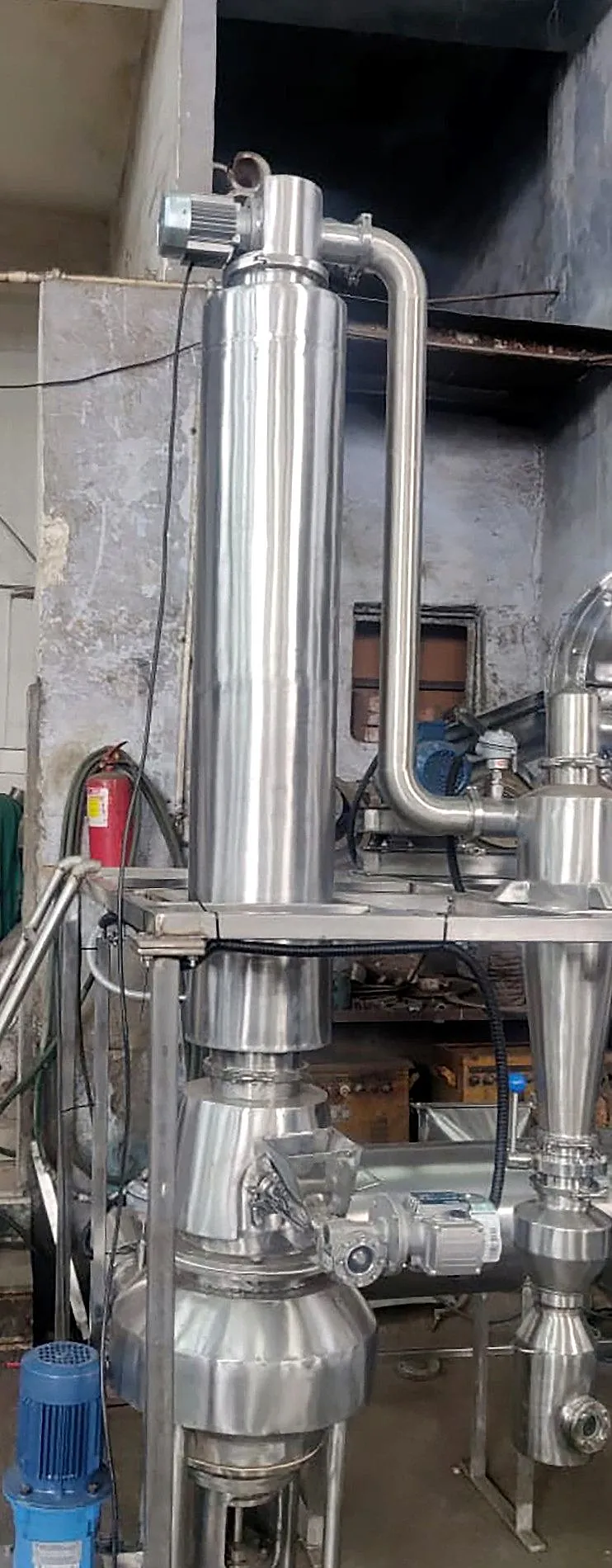 Compact spin flash dryerScrew feeder, drying column and cyclone
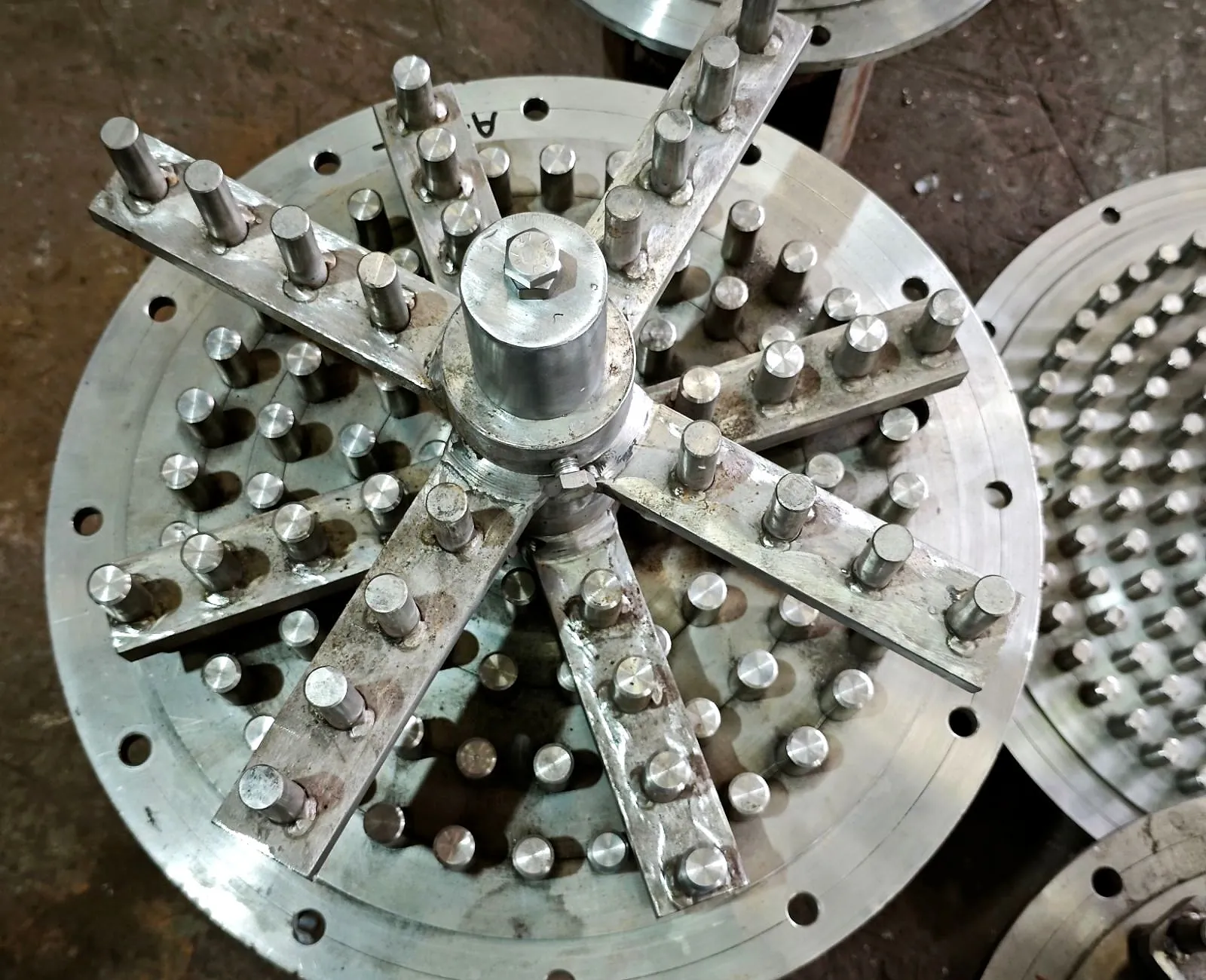 Eight-arm rotorPins sized to the product
Compare
Spin flash, flash, spray or paddle?
The form of your feed decides the dryer. Here is how they differ.
| Spin flash dryer | Flash dryer | Spray dryer | Paddle dryer | |
|---|---|---|---|---|
| Feed | Wet cake, filter cake, paste, sludge | Loose, free-flowing wet solids | Pumpable liquids & slurries | Wet solids, pastes, sludge |
| How it dries | Rotor breaks the cake in a hot-air vortex | Particles carried in a hot-air duct | Atomized droplets in a chamber | Indirect heat through hollow paddles |
| Drying time | Seconds | Seconds | Seconds | Long – minutes to hours |
| Product | Fine powder, de-agglomerated | Powder, as fed | Fine spherical powder | Granules or powder |
| Footprint | Compact, vertical | Tall duct, simple | Large chamber | Long horizontal body |
| Main limit | Feed must be screw-conveyable | No sticky or lumpy feed | Feed must be pumpable | Larger size per kg of water |
Typical behaviour from industry practice; your product sets the real answer. Full comparison: spin flash dryer vs other drying technologies.
Pilot trials
Test your cake before you invest
Run your own wet cake on the 10 kg/hr pilot spin flash dryer in our Ahmedabad R&D centre. You hold the real powder in your hand, and we collect the data to size your industrial plant.
- Find stickiness, wall build-up or heat damage before you buy
- Rotor type and speed, air temperatures and feed rate tuned to your product
- Powder samples to approve with your own customers
Why Acmefil
Engineering you can scale on
- Since 2000 – more than two decades designing and building drying and concentrating plants in Ahmedabad.
- Designed around your cake – rotor type, air temperatures, material of construction and powder size engineered for your feed.
- Rotors made in-house – pin mill and cage mill rotors machined in our Vatva works, with genuine spares made to drawing.
- ISO 9001:2015 quality – strict control from raw-material purchase to erection and commissioning.
- 20+ engineers on site – our own installation, commissioning and after-sales team.
- One group, the whole line – spray, flash and fluid bed dryers, evaporators, bag filters and hot air generators under one roof.

Components
Every part of the plant, explained
From the screw feeder to the bag filter – what each part does and how to specify it.
Screw feeder & disintegrator
Meters wet cake steadily and breaks it as it enters the hot air.
Read the guideHot air generator
Direct or indirect fired – how to choose for your product and fuel.
Read the guideCyclone separator
Recovers most of the dry powder from the air stream.
Read the guideBag filter
Collects the fines for full product recovery and clean exhaust.
Read the guideDust collection
Cyclone, bag filter and wet scrubber options compared.
Read the guideProcess flow diagram
The complete layout: feed, air, drying, separation and exhaust.
Read the guideBeyond spin flash
The complete line from one group
Spray, flash and fluid bed dryers, evaporation and ZLD – all designed and built by Acmefil.
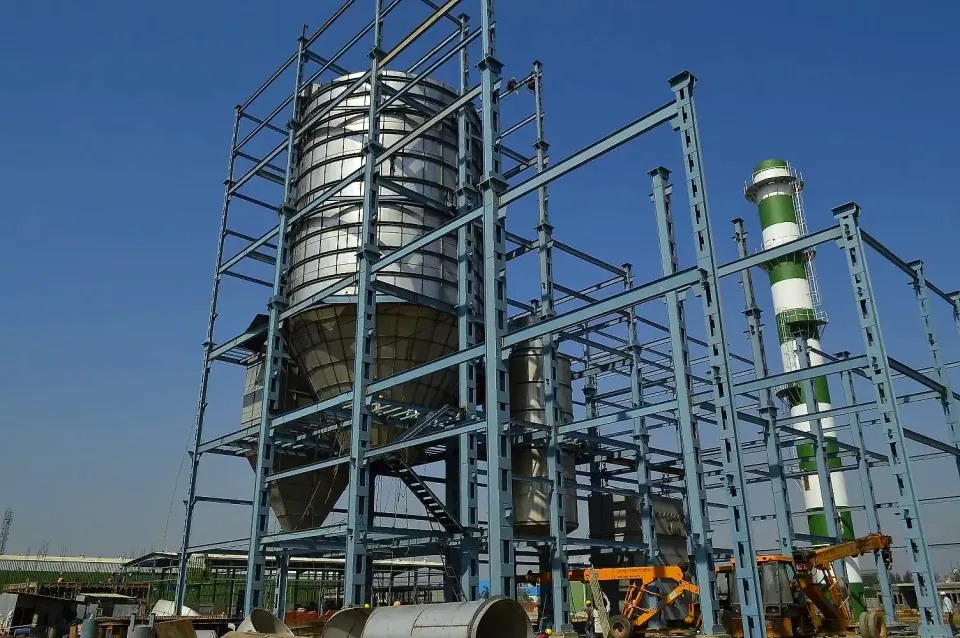 Spray dryersLiquids and slurries to powder
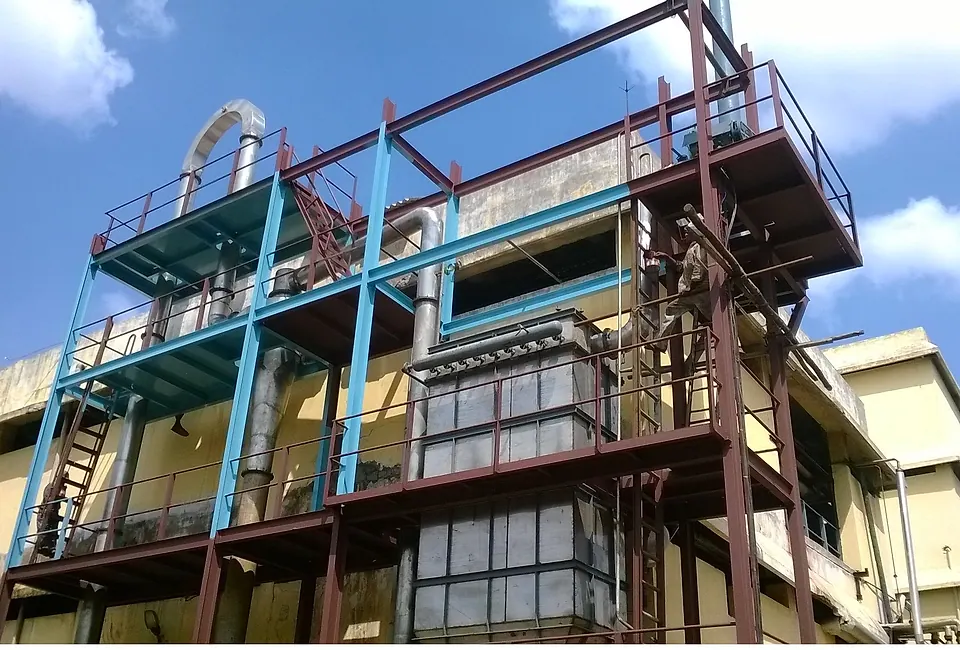 Flash dryerFast drying of free-flowing wet solids
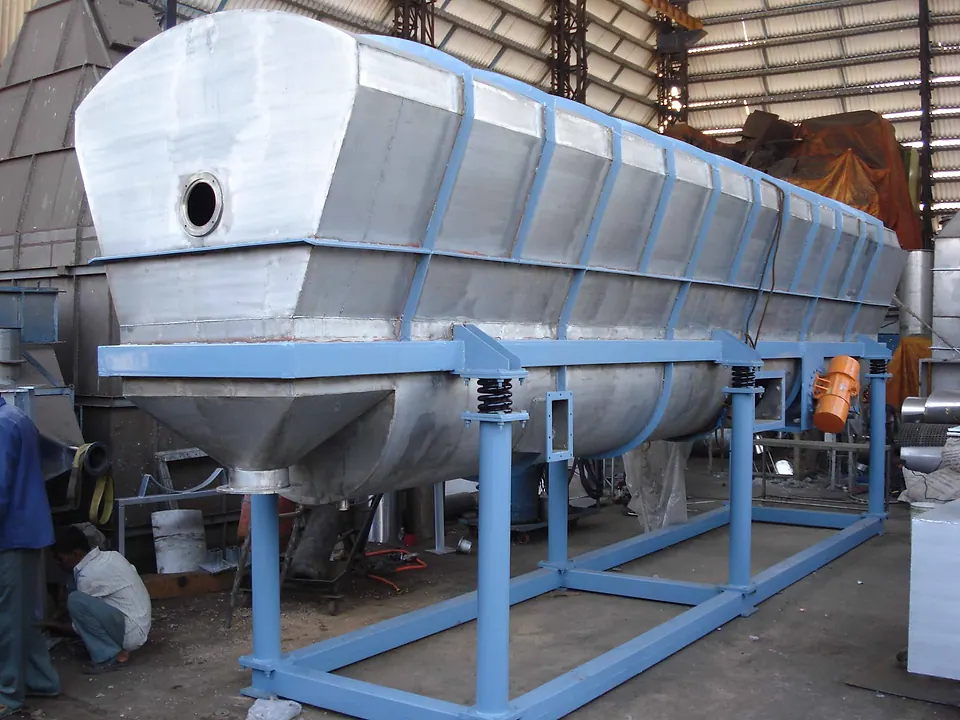 Fluid bed dryerVibratory and static fluid bed dryers
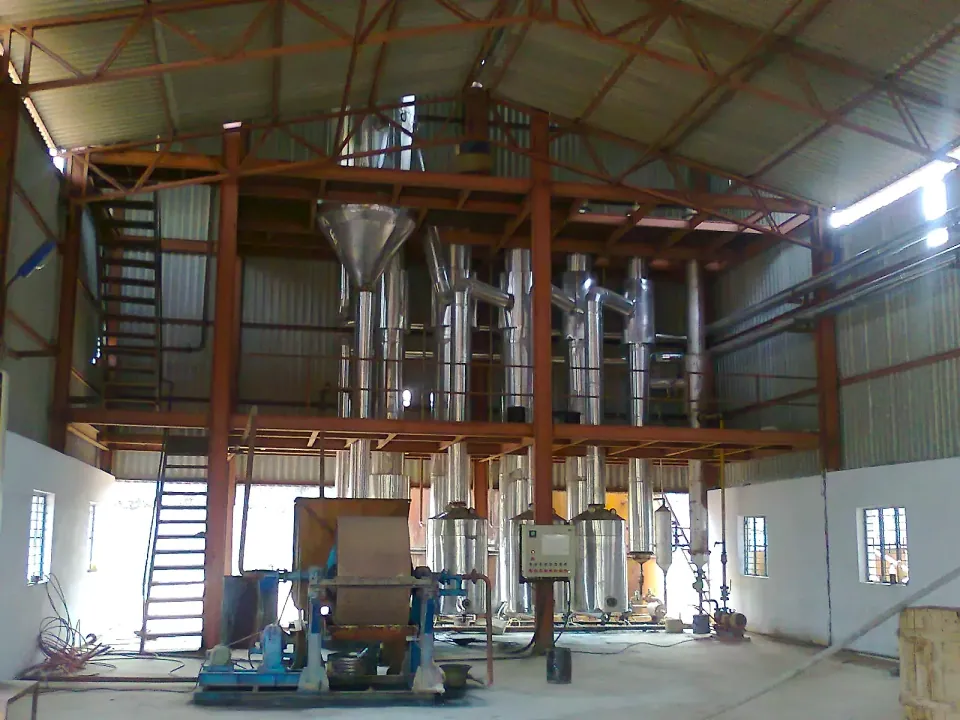 EvaporatorsFalling film, forced, natural circulation & hybridZero Liquid DischargeMembranes, MEE and effluent dryers
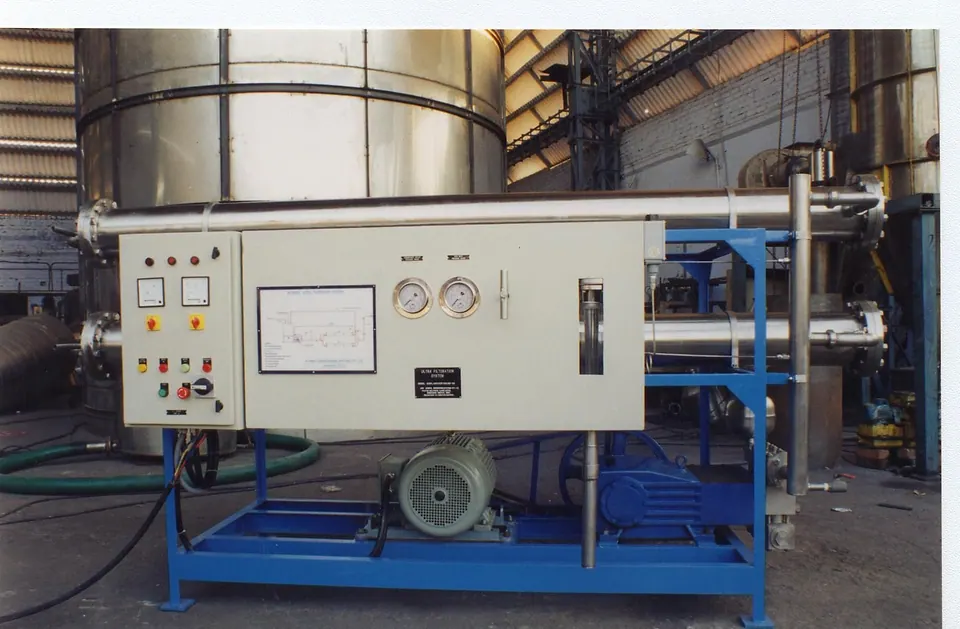 Membrane systemsMicro, ultra, nano filtration & RO
FAQ
Spin flash drying questions, answered
What is a spin flash dryer?
A continuous dryer that turns wet cake, filter cake, paste or sludge straight into dry powder. A rotor at the base of the drying chamber breaks the feed up inside a swirling stream of hot air, the particles dry in seconds, and a cyclone and bag filter collect the powder. More in understanding spin flash dryers.
How does a spin flash dryer work?
A screw feeder meters the wet cake into the chamber. Hot air enters the base tangentially and swirls upwards, while the rotor breaks the cake into fine particles. Dry, fine particles rise through a classifier at the top and leave with the air; wetter lumps fall back and are broken again. Step by step: spin flash dryer working principle.
Which materials can be dried in a spin flash dryer?
Pigments and dyes, chemical and agrochemical intermediates, inorganic salts and minerals, filter press cake, sticky and gelatinous cake, high-viscosity pastes and industrial ETP sludge – plus food, pharma and specialty products that suit short drying times. See spin flash dryer applications.
What is the difference between a spin flash dryer and a flash dryer?
A flash dryer only carries particles in a hot air stream, so the feed must already be loose and free-flowing. A spin flash dryer adds a rotor and a swirling chamber that break up cake and paste as they dry – so it handles sticky, lumpy feeds a flash dryer cannot. Compare them in spin flash dryer vs other drying technologies.
Pin mill or cage mill rotor – which should I choose?
Pin mill rotors shear sticky, gelatinous cake into fine particles and suit products that need a fine, uniform powder. Cage mill rotors are open and robust – better for heavy wet cake and viscous sludge that could choke a pin mill. Read pin mill type and cage mill type.
How is a spin flash dryer sized?
On its water evaporation rate in kg/hr – the wet feed rate minus the dry powder output. Feed moisture and final moisture set that number; the allowed inlet and outlet air temperatures then set the air flow and the chamber size. The sizing and RFQ checklist lists what to send.
Knowledge hub
Spin flash drying guides from the people who build the plants
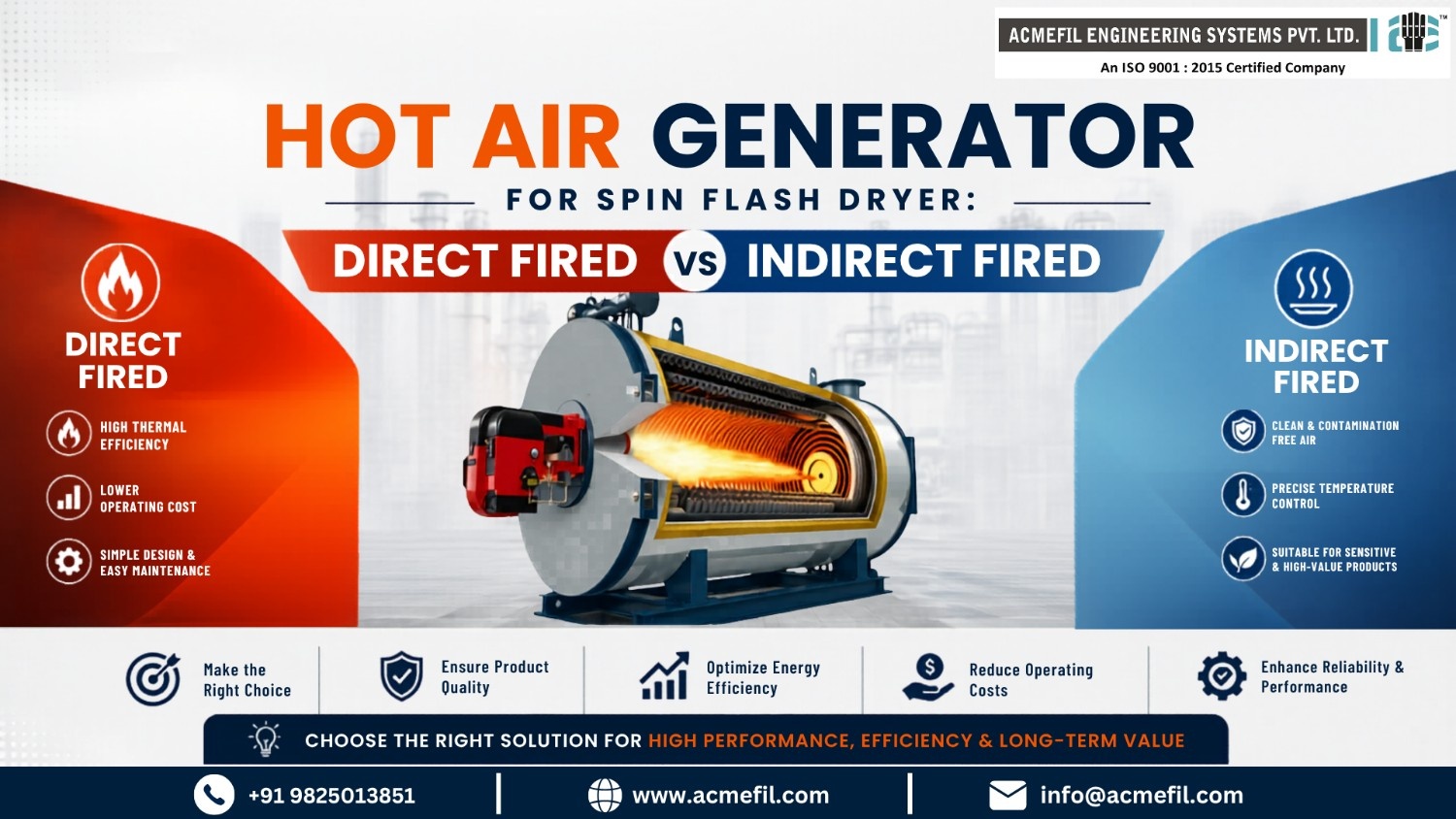 Spin Flash Dryer · 14 min readHot Air Generator for Spin Flash Dryer: Direct Fired vs Indirect Fired Selection GuideA hot air generator for spin flash dryer systems is not just a heating accessory. It decides how stable your…
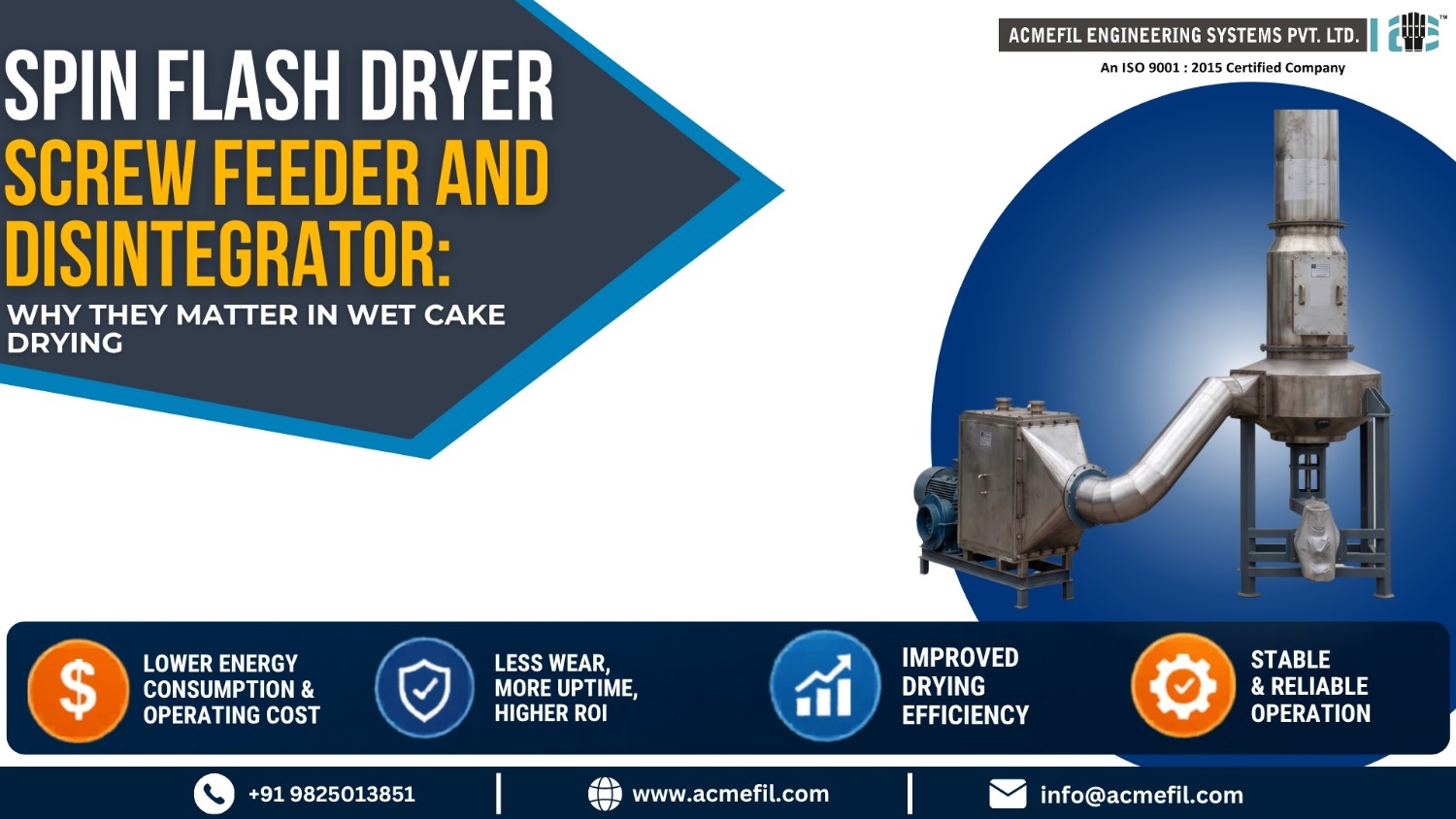 Spin Flash Dryer · 14 min readSpin Flash Dryer Screw Feeder and Disintegrator: Why They Matter in Wet Cake DryingA spin flash dryer screw feeder and disintegrator decide whether wet cake drying runs smoothly or becomes a blockage problem.…
 Spin Flash Dryer · 12 min readSpin Flash Dryer Capacity, Specification, Sizing and RFQ ChecklistSpin flash dryer capacity cannot be selected from feed rate alone. The correct capacity depends on evaporation load, inlet moisture,…
 Spin Flash Dryer · 10 min readPaste Dryer Manufacturer: How to Select the Right Dryer for Sticky Wet Cake, Sludge and Chemical PasteA good paste dryer manufacturer should not only supply a drying machine. The manufacturer must first understand whether your material…
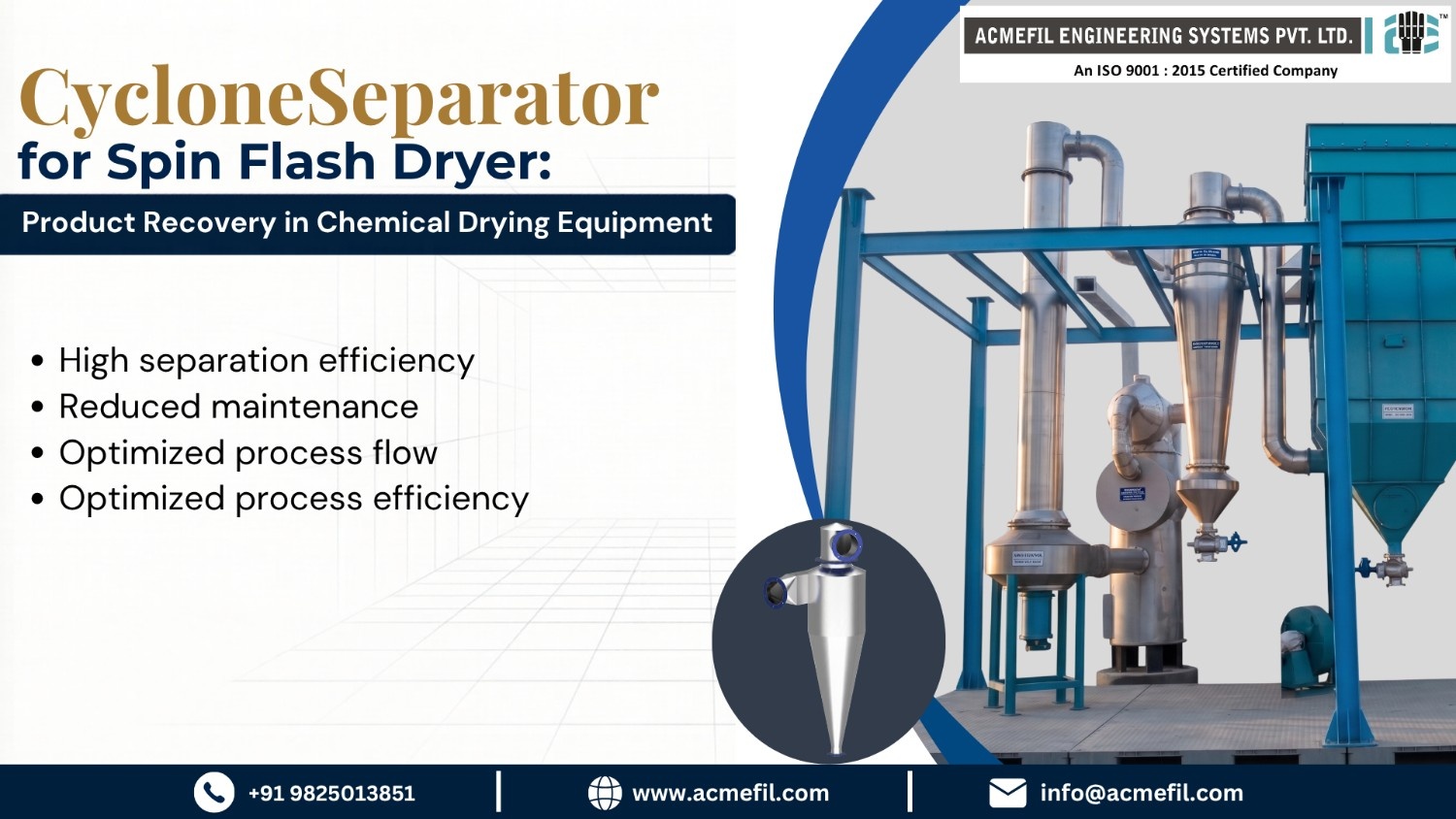 Spin Flash Dryer · 11 min readCyclone Separator for Spin Flash Dryer: Product Recovery in Chemical Drying EquipmentA cyclone separator for spin flash dryer systems is not just a dust collection accessory. It is the primary powder…
 Spin Flash Dryer · 11 min readChemical Paste Dryer and Inorganic Chemical Drying Equipment: How to Select the Right DryerA chemical paste dryer is used when the feed is not a free-flowing powder but a wet cake, filter cake,…
Free proposal
Tell us about your wet cake. We will size your spin flash dryer.
Share the product, feed moisture, final moisture and capacity – get a configuration, a budget quote and a pilot-trial option within one working day.