Design and Operation Inside Spin Flash Dryers
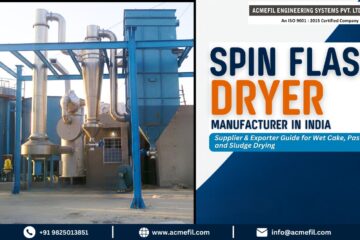
A spin flash dryer is designed for one main purpose: to convert wet cake, filter cake, slimy paste, gelatinous material, or high-viscosity sludge into dry powder by combining mechanical disintegration with hot air drying. The design is not just a chamber with hot air. The real performance comes from how the feed is controlled, broken, dispersed, dried, separated, and discharged.
In my experience, most spin flash dryer problems start when the feed behavior is not understood properly before equipment sizing. Sticky cake does not behave like free-flowing powder. It bridges, forms lumps, sticks to metal surfaces, and blocks air contact. That is why spin flash dryer design and operation must begin with material behavior, not only evaporation capacity.
For the basic process sequence, you can also read the spin flash dryer working principle guide.
Why Spin Flash Dryer Design Is Different From Standard Flash Drying
A standard flash dryer works well when the feed is already granular, powdery, or easy to disperse in an air stream. It depends mainly on high-velocity hot air to carry and dry the material.
Wet cake is different.
A filter press discharge may come out as a sticky cake. Dye intermediates, pigments, agrochemical intermediates, and sludge may behave like paste or lumps. If this material enters a normal flash dryer without proper breaking, hot air flows around the lump instead of drying it uniformly.
That creates four common problems:
- Uneven final moisture
- Choking near the feed zone
- Wet lumps in the final product
- Higher fuel and power consumption because the dryer is fighting poor dispersion
A spin flash dryer solves this by placing a disintegrator at the material entry zone. The disintegrator breaks the wet feed as it meets the hot drying air. Once the material is broken into smaller particles, surface area increases and moisture removal becomes faster.
This is the core difference between a flash dryer and a spin flash dryer. For a deeper technology comparison, refer to comparing spin flash dryers with other drying technologies.
Main Components Inside a Spin Flash Dryer
A good spin flash dryer is a coordinated system. Each component affects the next one. If the feed screw surges, the disintegrator overloads. If the disintegrator is wrong, the cyclone receives inconsistent particles. If the bag filter is undersized, pressure drop rises and the system becomes unstable.
| Component | What It Does | Design Point That Matters |
|---|---|---|
| Feed hopper | Holds wet cake, paste, or sludge before feeding | Must reduce bridging and uncontrolled lump drop |
| Variable speed feed screw | Controls feed rate into the dryer | Feed rate must match evaporation load and air flow |
| Lump breaker / disintegrator | Breaks sticky cake into smaller particles | Cage mill or pin mill selection depends on feed behavior |
| Hot air generator | Supplies drying air at controlled temperature | Direct or indirect heating depends on product sensitivity |
| Air distributor | Introduces hot air into the drying zone | Poor air distribution causes dead zones and uneven drying |
| Drying chamber | Provides contact between hot air and dispersed solids | Geometry affects residence time and particle classification |
| Cyclone separator | Separates dried powder from air stream | Must suit powder size and dust loading |
| Bag filter | Captures fine powder and cleans exhaust air | Important for dust recovery and clean operation |
| Rotary air lock valve | Discharges powder while maintaining system sealing | Leakage affects air balance and product discharge |
| Control panel | Monitors temperature, feed rate, motor load, and pressure | Operators need stable control, not only start-stop buttons |
When reviewing a spin flash dryer supplier, ask how these components are selected for your material. A generic answer usually means the design is not yet tied to your product.
Step-by-Step Operation of a Spin Flash Dryer
Wet Feed Enters Through a Controlled Feeding System
The process begins with wet feed entering the dryer through a feed hopper and screw feeder. In many chemical and dye plants, the feed comes directly from filter press discharge.
This is a practical advantage because it reduces intermediate handling. But direct feeding also creates responsibility. The feed system must handle lumps, stickiness, variable moisture, and inconsistent cake structure.
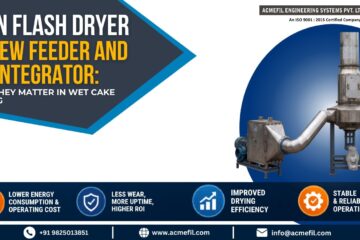
The screw feeder should not simply push material into the chamber. It must meter the feed steadily. A sudden feed surge can overload the disintegrator, reduce outlet temperature, and send wet particles into the separation system.
The Disintegrator Breaks the Wet Cake
This is the heart of spin flash dryer design.
The disintegrator breaks wet cake, paste, or sludge into smaller particles at the feed zone. This increases exposed surface area and prevents the material from entering the drying chamber as heavy lumps.
Acmefil spin flash dryers use specially designed disintegrators such as cage mill type and pin mill type arrangements. The choice depends on the lump strength, stickiness, product sensitivity, and final powder requirement.
| Disintegrator Type | Better Suited For | Practical Selection Logic |
|---|---|---|
| Cage mill type | Wet cake, dye intermediates, sticky lumps, filter cake | Useful when the feed needs strong breaking and dispersion |
| Pin mill type | Materials needing finer disintegration and controlled particle breakdown | Useful when particle size and dispersion quality are more sensitive |
| Trial-based selection | Uncertain feed behavior, new product, variable sludge, gelatinous paste | Best option when lab assumptions may not match plant behavior |
Do not select the disintegrator only by looking at the product name. Two materials with the same chemical family can behave differently if moisture, particle structure, filtration method, or upstream washing changes.
Hot Air Contacts the Dispersed Material
Once the wet feed is broken, it meets hot drying air. Moisture begins to evaporate rapidly because the material has been dispersed into smaller particles.
This short contact time is one reason spin flash dryers can be suitable for certain heat-sensitive materials. The product is exposed to drying temperature for a short duration, not for hours as in many conventional tray or batch drying systems.
But short residence time is not a license to ignore temperature. Operators must still control:
- Inlet air temperature
- Outlet air temperature
- Feed rate
- Air flow
- Product moisture
- Pressure drop across cyclone and bag filter
For heat-sensitive products, the safe operating window should be confirmed through a pilot trial before scaling up.
Dried Powder Moves to Cyclone and Bag Filter
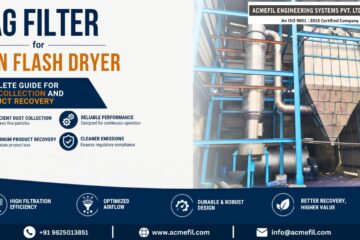
The drying air carries the dried powder out of the drying chamber. The cyclone separator collects the main powder fraction. Fine particles are then captured in the bag filter.
This separation stage is not secondary. It directly affects product recovery, dust control, operating cleanliness, and downstream handling.
A weak separation system can create:
- Product loss
- Dust leakage
- Higher filter cleaning frequency
- Inconsistent discharge from rotary valves
- Unstable system pressure
For plants processing dyes, pigments, agrochemicals, and chemical intermediates, dust containment and clean discharge are practical operating requirements, not optional finishing details.
Final Product Discharges Through Rotary Valves
The dried powder is discharged through rotary air lock valves. These valves help maintain pressure balance while allowing product discharge.
If the rotary valve leaks, jams, or wears, air balance changes. That can affect conveying velocity, cyclone performance, bag filter load, and product discharge consistency.
This is why rotary valve design and maintenance should be part of spin flash dryer selection, especially for abrasive or sticky powders.
Design Parameters That Decide Dryer Performance
Spin flash dryer design is not only a mechanical drawing exercise. It is process design. The final system must be matched to the material and the required output.
Feed Characteristics
Before sizing the dryer, collect these details:
- Feed form, such as wet cake, paste, sludge, or gelatinous mass
- Initial moisture content
- Target final moisture content
- Stickiness and lump strength
- Bulk density
- Heat sensitivity
- Abrasiveness
- Corrosive nature
- Toxicity or dust hazard
- Upstream process, such as filter press, centrifuge, or reactor discharge
If the feed changes from batch to batch, say that clearly during RFQ. A dryer designed for a stable filter cake may struggle if the plant later feeds inconsistent sludge.
Material of Construction
Material of construction depends on corrosion, hygiene, temperature, product contamination risk, and industry requirement.
For chemical and dye intermediates, corrosion resistance may matter more than appearance. For food or pharmaceutical applications, hygiene and cleanability become more important. For abrasive minerals or pigments, wear protection must be reviewed.
The right question is not “Is the dryer stainless steel?” The better question is: “Which contact parts need which material, and why?”
Feed Screw and Lump Breaker Design
The feed system must prevent bridging and choking. Sticky feed often needs a lump breaker and variable speed feeding arrangement.
A variable speed feed screw gives operators control. If outlet temperature begins falling or product moisture rises, feed rate can be reduced. If the system is stable, feed can be optimized gradually.
Without feed control, operators are forced to solve process instability after the material has already entered the chamber.
Air Flow and Temperature Control
Hot air must do two jobs:
- Supply heat for evaporation
- Carry dried particles to the separation system
If air flow is too low, material may settle or choke. If it is too high, residence time may reduce and fines carryover may increase. Temperature must be selected based on moisture load, heat sensitivity, and product behavior.
For products sensitive to contamination from combustion gases, an indirect fired hot air generator may be considered. For other products, direct fired heating may be suitable after process review.
Acmefil’s support pages on direct fired hot air generators and indirect fired hot air generators are useful when selecting the heat source.
Separation and Dust Collection Design
Cyclone and bag filter sizing should match powder behavior. Fine powders and pigments need more attention to dust collection. Abrasive products need suitable wear consideration. Sticky fines can affect filter cleaning.
For this reason, the bag filter should be treated as part of the drying system, not as an afterthought.
Where Spin Flash Dryers Fit Best
Spin flash dryers are best suited when the material is difficult for a normal flash dryer but still capable of being broken and dried in a short residence time.
Typical fit areas include:
- Filter cakes from dye and chemical processes
- Reactive dyes and dye intermediates
- Pigments
- Agrochemical intermediates
- Slimy paste
- Gelatinous feed
- High-viscosity sludge
- Wet cake from filter press discharge
Acmefil’s verified application list includes dye intermediates such as J-Acid, N-Methyl J-Acid, Acetanilide, Sulfotobias Acid, reactive dyes, pigments, and agro chemicals.
For sludge-specific selection, read the detailed guide on spin flash dryer for sludge drying.
When a Spin Flash Dryer May Not Be the Right Choice
A spin flash dryer is not automatically the answer for every wet feed.
It may not be the first choice when:
- The feed cannot be mechanically disintegrated properly
- The product needs very long residence time
- The material melts, chars, or becomes tackier at drying temperature
- The required final particle structure cannot tolerate disintegration
- The product needs extremely gentle handling
- Feed composition changes too widely without process control
- Dust explosion or solvent risk requires a different system design
This is why trial data matters. Dryer selection should be based on how the material behaves under real drying conditions, not only on a product name or moisture percentage.
For procurement-stage selection, use the complete guide on how to choose a spin flash dryer.
Operating Logic: What Operators Must Watch
A well-designed spin flash dryer still needs disciplined operation. Most performance issues come from ignoring early warning signs.
| Operating Variable | What It Indicates | What Operators Should Watch |
|---|---|---|
| Feed rate | Material load entering dryer | Sudden increase can cause wet discharge or choking |
| Inlet air temperature | Heat available for evaporation | Must match product sensitivity and moisture load |
| Outlet air temperature | Drying balance and moisture removal | Falling outlet temperature may indicate overfeeding |
| Disintegrator motor load | Mechanical resistance at feed zone | Rising load may indicate lumps, choking, or feed change |
| Pressure drop | Air path condition | Rising pressure may indicate bag filter loading or blockage |
| Product moisture | Final quality | Must be tested against specification, not guessed visually |
| Cyclone discharge | Main powder recovery | Irregular discharge may indicate air lock or bridging issue |
| Bag filter cleaning | Fine recovery and exhaust cleanliness | Frequent cleaning may indicate high fines or poor separation |
Operators should log these readings. Without logs, troubleshooting becomes guesswork.
Common Problems in Spin Flash Dryer Operation
| Problem | Likely Cause | Practical Correction |
|---|---|---|
| Wet lumps in final powder | Poor disintegration, overfeeding, low temperature, low air flow | Reduce feed rate, inspect disintegrator, verify temperature and air flow |
| Choking near feed zone | Sticky feed surge, weak lump breaking, bridging in hopper | Improve feed consistency, check screw feeder and lump breaker |
| High outlet moisture | Feed rate too high, heat input too low, air flow imbalance | Stabilize feed and review inlet/outlet temperature trend |
| Excess fines in bag filter | Over-disintegration or high conveying velocity | Review disintegrator speed and air flow |
| Product sticking inside chamber | Feed becomes tacky at operating temperature | Trial different temperature/feed settings or confirm suitability |
| High power draw | Disintegrator overload, feed lumps, mechanical wear | Inspect feed condition, rotor clearance, bearings, and drive load |
| Dust leakage | Bag filter issue, rotary valve leakage, poor sealing | Inspect filter bags, seals, rotary valve, and ducting |
| Inconsistent product moisture | Unstable feed moisture or feed rate | Improve upstream dewatering consistency and feed control |
For routine operating practices, see the guide on spin flash drying best practices for operation.
Maintenance Points That Affect Design Performance
Maintenance is not separate from design. A dryer may be correctly sized, but poor maintenance can still reduce drying performance.
The most important inspection areas are:
- Feed screw wear and buildup
- Lump breaker condition
- Disintegrator blades, pins, cage, or rotor parts
- Bearing temperature and vibration
- Hot air duct leakage
- Air distributor blockage
- Cyclone cone buildup
- Bag filter pressure drop
- Rotary valve sealing and discharge
- Instrument calibration
In sticky or abrasive applications, inspection frequency should be based on actual product behavior. A pigment dryer and a sludge dryer will not have the same maintenance pattern.
For cost and lifecycle planning, connect this article with the spin flash dryer maintenance cost analysis.
Pilot Trials Reduce Scale-Up Risk
For difficult wet cake or paste, a pilot trial is often the most practical way to reduce risk before ordering a full-scale dryer.
A trial can answer questions that a datasheet cannot:
- Will the feed break properly?
- Does it stick at the selected operating temperature?
- Can target moisture be reached?
- What is the powder behavior after drying?
- Does the product generate excessive fines?
- Is the product heat-sensitive under actual residence time?
- Which disintegrator arrangement is more suitable?
Acmefil has an in-house pilot plant facility for spin flash dryer trials with 10 kg/hr water evaporation capacity. For buyers handling new products, variable wet cake, or high-value intermediates, this trial stage can prevent expensive selection mistakes.
You can also review Acmefil’s spin flash dryer manufacturer page for the main equipment overview.
RFQ Checklist Before Asking for a Spin Flash Dryer Quote
Before sending an inquiry, prepare the following information:
- Product name and industry
- Feed form, such as cake, paste, sludge, or slurry
- Initial moisture and target final moisture
- Feed rate or required dry powder output
- Source of feed, such as filter press or centrifuge
- Stickiness, lump size, and flow behavior
- Heat sensitivity or degradation temperature, if known
- Bulk density before and after drying
- Corrosive or abrasive nature
- Required material of construction
- Dust hazard or solvent presence
- Utility available, such as steam, gas, LDO, or electricity
- Space limitations
- Automation requirement
- Product collection and packing method
- Need for pilot trial
A serious manufacturer will use this data to discuss design. If the quote comes back without questions, be careful. Spin flash dryers should not be selected like a standard catalogue item.
Practical Design Rule I Follow
I do not treat spin flash dryer design as only thermal sizing. Thermal load is important, but the first question is always mechanical behavior.
Can the material enter the dryer steadily?
Can it be broken without forming sticky buildup?
Can the hot air contact the new surface area immediately?
Can the dried powder leave the chamber without carrying too much fines?
If these four questions are answered properly, the rest of the design becomes more reliable. If they are skipped, even a dryer with enough heat input can fail in operation.
FAQs
What is the main design principle of a spin flash dryer?
The main design principle of a spin flash dryer is simultaneous disintegration and drying. Wet cake, paste, gelatinous feed, or sludge enters through a controlled feeding system. A rotating disintegrator breaks the material into smaller particles while hot air evaporates moisture and carries the dried powder to a cyclone or bag filter.
Why does a spin flash dryer need a disintegrator?
A disintegrator is required because wet cake and sticky paste do not disperse easily in hot air. Without mechanical breaking, the material may form lumps, choke the feed zone, and dry unevenly. Cage mill and pin mill type disintegrators are used depending on the product’s stickiness, lump strength, and drying requirement.
What materials are suitable for spin flash drying?
Spin flash drying is suitable for wet cake, filter cake, slimy paste, gelatinous materials, high-viscosity sludge, dye intermediates, reactive dyes, pigments, agrochemical intermediates, and similar materials that require mechanical dispersion before hot air drying.
How is a spin flash dryer different from a standard flash dryer?
A standard flash dryer is mainly suited for free-flowing powders or easily dispersed materials. A spin flash dryer is designed for difficult wet feed because it includes a disintegrator at the feed zone. This allows sticky cake or paste to be broken before drying and pneumatic conveying.
Should every wet cake be tested before selecting a spin flash dryer?
For difficult, sticky, heat-sensitive, or new products, pilot testing is strongly recommended. A trial confirms whether the material breaks properly, dries to the required moisture, avoids sticking, and produces acceptable powder characteristics before full-scale equipment selection.
Conclusion
Spin flash dryer design and operation depend on the relationship between feed control, disintegration, hot air contact, separation, and discharge. If the wet material is not broken properly at the feed zone, the dryer will struggle no matter how much heat is supplied.
For wet cake, filter cake, gelatinous paste, dye intermediates, pigments, agrochemicals, and high-viscosity sludge, the right spin flash dryer can reduce handling problems and support continuous drying. But the design must be based on real feed behavior.
The safest next step is to share the product data, moisture details, feed behavior, utility availability, and final powder requirement with the engineering team. For difficult materials, request a pilot trial before finalizing the full-scale dryer.
For selection support, visit the Spin Flash Drying contact page or connect through Acmefil’s design and engineering support.

Siddharth Nair is the Technical Director at Acmefil Engineering Systems Pvt. Ltd., an ISO 9001:2015 certified manufacturer of industrial drying and evaporation systems headquartered in Ahmedabad, Gujarat, he has led technical evaluation, application engineering and customer solution design for spray dryers, multi-effect evaporators, agitated thin film dryers, spin flash dryers and zero liquid discharge systems.